Our Lives Are
Dominated by Projects

Learn from 35+ years of project management expertise through practical books and proven methodologies. Author, consultant, and Partner at O&A Consult.

35+ Years Project Management Experience

Executive MBA in Project Management

5 Published Books

Partner at O&A Consult

Published Books

Comprehensive guides covering project management, personal development, and practical life skills based on decades of real-world experience.

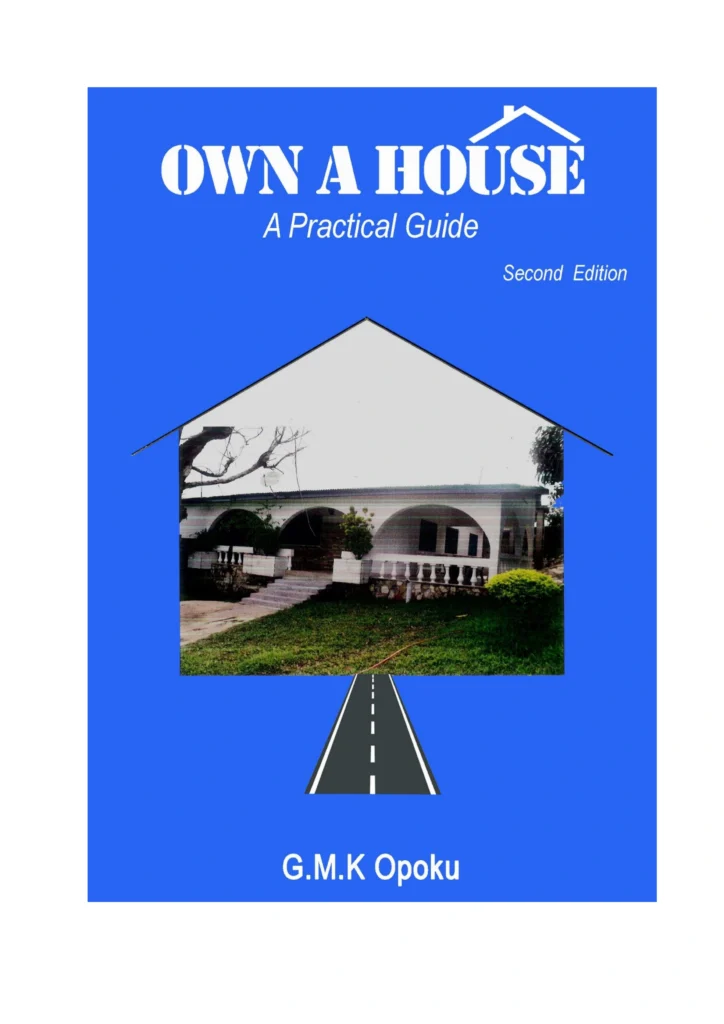
Own A House
A Practical Guide

A comprehensive guide for prospective house owners covering site selection, land acquisition, financing, and construction management.

Target Audience:

Prospective homeowners in Ghana

Transforming Organizations & Nations
The Project Approach

Strategic text for leaders, managers, and project professionals focusing on organizational transformation through project management.

Target Audience:

Leaders, managers, MBA students

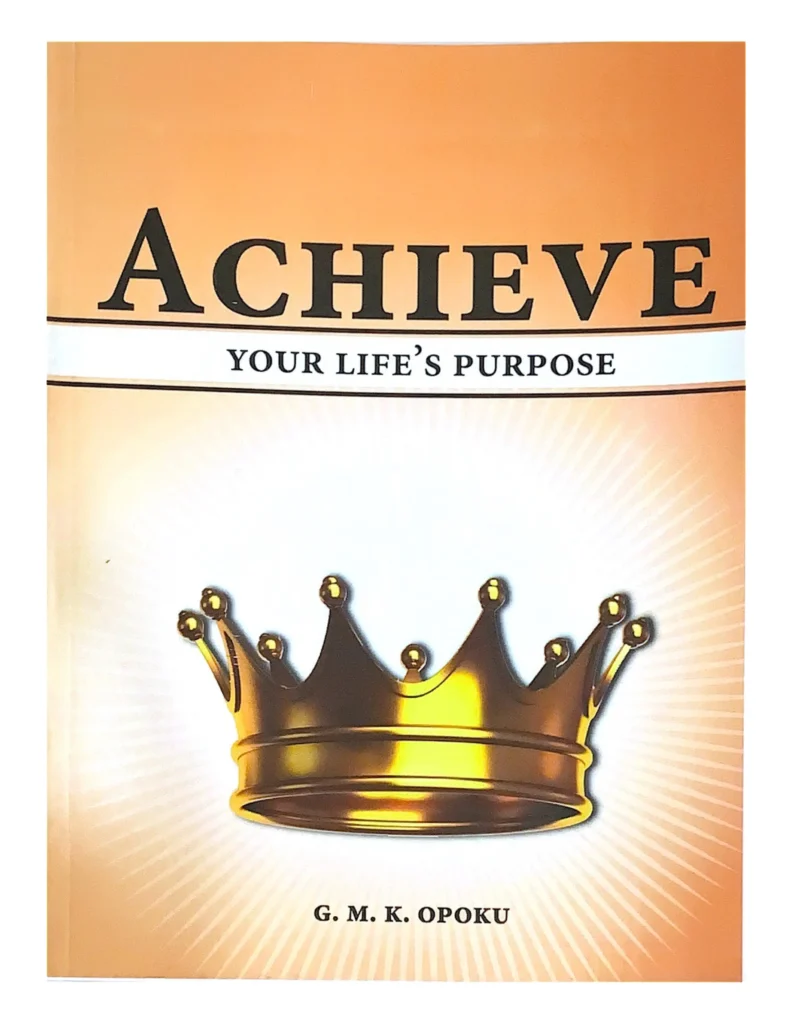
Achieve Your Life's Purpose

A motivational and self-development guide targeted at students, young graduates, and young adults.

Target Audience:

Students and young professionals

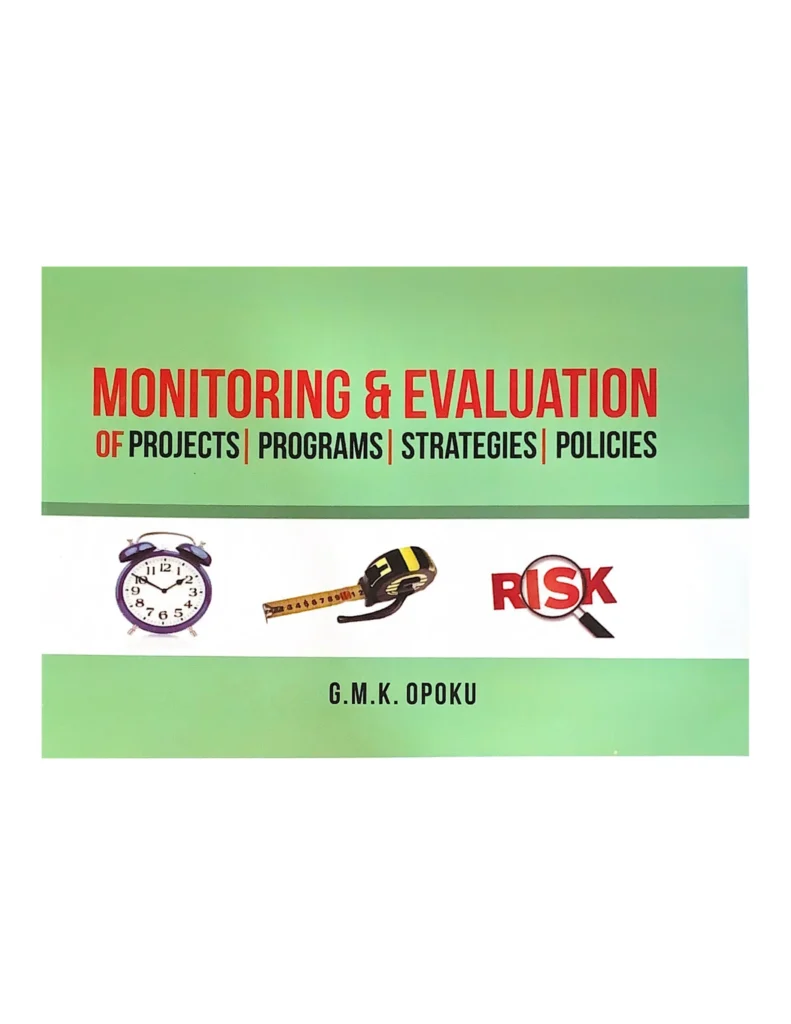
Monitoring & Evaluation of Projects, Programs, Strategies, Policies

Advanced techniques and tools for effective project monitoring and evaluation.

Target Audience:

Project management professionals

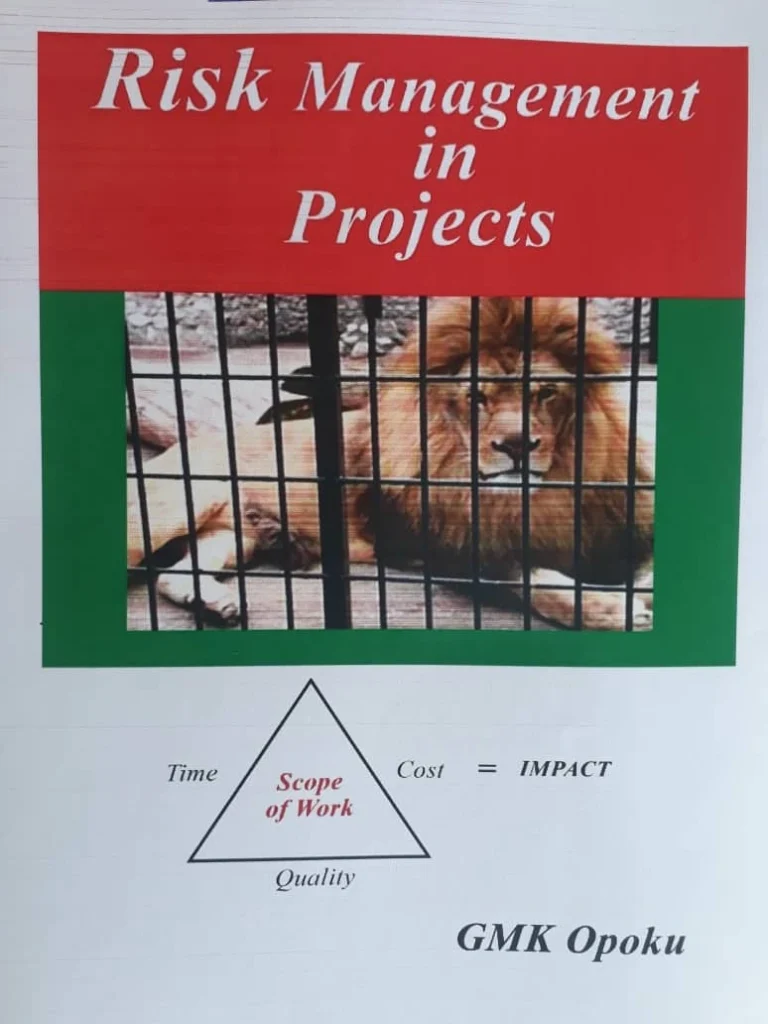
Risk Management in Projects

The Book is an attempt to look broadly at almost all the major issues that affect Projects and their success.

Target Audience:

Project management professionals

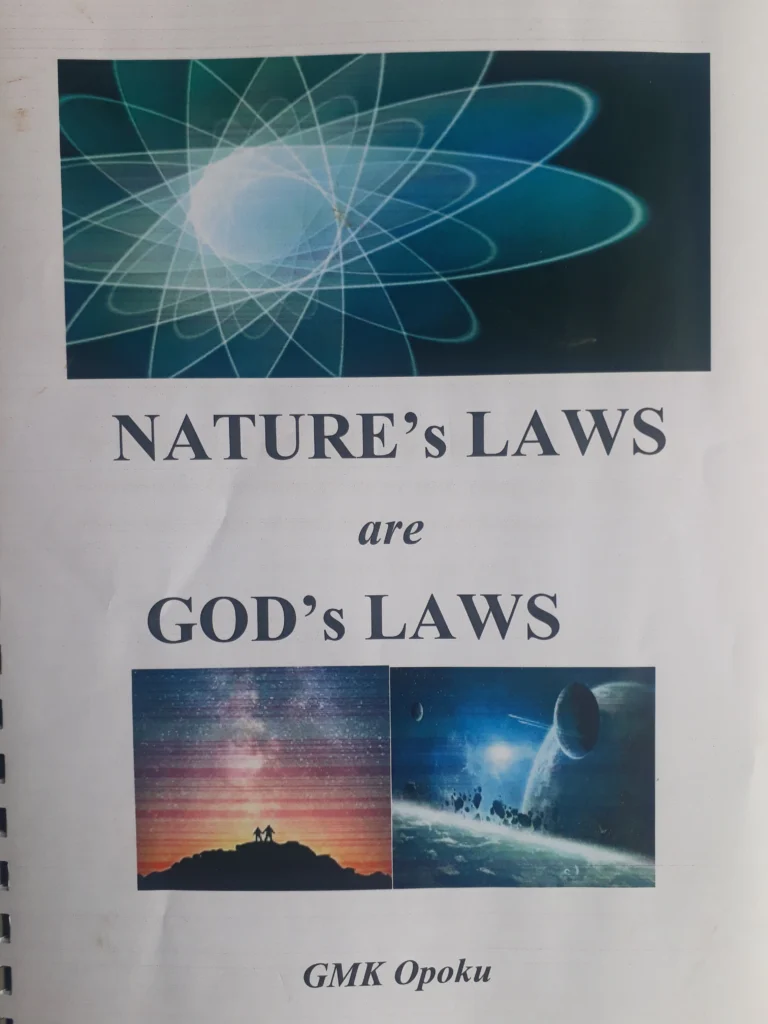
Nature’s Laws are God’s Laws

This Book is based on the author’s personal observations, experiences, and reflections about Nature and GOD. His conclusion is that Nature and it’s Laws are simply an extension of GOD’s Order.

Target Audience:

Project management professionals

About GMK Opoku

GMK Opoku is a Project Management Expert with over thirty-five years of experience in Project Management and Contract Administration. He holds a BSc Civil Engineering and an Executive MBA (Project Management). He has strong interest in people, organizations and their development.

He worked on major housing projects in Ghana including the redevelopment of the then Continental Hotel into Golden Tulip Hotel in Accra, Sakumono Estate, Tema Community 3 Estate, and Ashongman Estates also in Accra as well as several private housing projects.

He also worked as Resident Engineer on a number of road and infrastructure projects in Ghana, including the Airport City in Accra.

Education

BSc Civil Engineering
Executive MBA (Project Management)

Experience

35+ Years in Project Management
International Projects

Continental Hotel to Golden Tulip Hotel

Major redevelopment project in Accra

Ashongman Estate near Kwabenya in Accra

A major residential development covering over 1,000 acres

World Bank Projects (2003-2007)

Civil Engineering and Contract Management

Four-tier Pokuase Interchange Project in Accra

Resident Project Management Consultant (2018-2020)

O&A Consult Services

Partner at O&A Consult, a management consulting firm with expertise in Business Performance Improvement and Project Management.

Business Performance Improvement

Helping organizations optimize their operations and achieve strategic objectives through proven methodologies.

Project Management Consulting

Expert guidance on project planning, execution, monitoring, and evaluation for successful project delivery.

Get In Touch

Ready to transform your projects or interested in my books? Let’s connect and discuss how we can work together.
0244-715809

opokugmk123@gmail.com

Ghana

Send a Message

Scroll to Top

This Book is based on the author’s practical experience of nearly four decades in the housing and build industry in Ghana and beyond. Over that period, he has gained deep insight of the industry which he shares in this Book with the hope that it will help prospective house owners minimize their risks and frustrations. The areas that have often been of great challenge to prospective house owners are site selection, land acquisition and title registration, choice of house type or design, and financing construction or house acquisition.

The fraud associated with land acquisition in Ghana, largely facilitated by the
land tenure system which is characterized by splinter ownership by families, clans, stools, communities, tribes, individuals etc; greed whereby each group
tries to usurp and outsmart the other make things even worse. What compounds the problem is that in most cases, ownership is not documented or properly
documented and boundaries not well defined and demarcated. The cumbersome
process of land title registration plus the bureaucracy, spiced with corruption and fraud make things difficult for prospective house owners, developers, and also businesses.

A major discovery I have made over the years is that majority of Ghanaians
including a significant proportion of technical experts in the sector, fail to appreciate or identify the different categories and the peculiar needs of
prospective clients of the industry for the purpose of tailoring housing solutions
appropriately. In Ghana, one of the key challenges is that acquisition of a house is seen more as a social and technical matter when in actual fact it is more of an investment matter and therefore is largely a financial matter. A house is not simply a shelter or residence but it is also an investment and a store of value.

Another common situation you will find in Ghana is that, prospective house
owners make choices of the house they want, even start building before finding out how much it will cost to build and where the funding will come from. Overall, the vital issue of the client’s ability to finance a proposed house
(a particular house design) to completion within a reasonable period of time is often ignored. Additionally, prospective house owners’ desires which are often based on their egos and in some cases competition with friends and foes usually far exceed their financial resourcefulness. Thus, the vital link between taste and ego on the one side and cost cum affordability on the other, both of which are crucial right from the start is usually lost on all parties, leading to many challenges along the way. This Book is not about Building Plans or Designs. It is about the Knowledge, the Thinking, and the Consultations needed for making important and wise decisions about owning a House, and also offering a useful guide to the actual Construction of a House.

The objective of the Book is to help prospective house owners minimize the
risks and frustrations associated with the process of owning a house, with
particular reference to the extra (redundant) yet avoidable costs that will arise, especially in Ghana.
This second edition of this Book is an update of the first edition published in 2003. Notable areas of revisions are the inclusion of this section (About This Book), the introduction of a new chapter – HOUSING FINANCE IN GHANA as Chapter 8, and update of the sample costing templates in Chapter 7.

TABLE OF CONTENTS
CHAPTER
1.0 INTRODUCTION
2.0 PEOPLE AND HOUSING NEEDS
3.0 SELECTING A SUITABLE HOUSE
4.0 COMMON BUILDING MATERIALS IN GHANA
5.0 SITE SELECTION
6.0 PROCUREMENT OF LAND AND TITLE REGISTRATION
7.0 PREPARATION OF A BUILDING PROJECT
8.0 HOUSING FINANCE IN GHANA
9.0 IMPLEMENTATION AND MANAGEMENT OF A
BUILDING PROJECT
10.0 HOUSING THE MASSES
– THE URBAN POOR
– THE RURAL POOR

The purpose of this book is to share my thoughts and experiences regarding projects and project management with not only project professionals but also with the general public. A key point that I have tried to highlight throughout the book is that, technical knowledge and skills are not enough to ensure the successful design and execution of present-day projects.

Reasonable knowledge of the social sciences or an understanding of people issues and leadership are equally important because they do have significant relevance as far as project management and project success are concerned. Furthermore, it is my hope that this book will open the frontier for a more expansive approach to project design, project management, and leadership for transformation.

The book is largely a strategic text that could be useful to people in leadership positions, top and middle level managers, MBA students, and students of development related studies. Project management practitioners, students of project management, and even non-professionals will find it a good companion.

The book is in three parts. Part 1 is on project conception and preparation within the framework of the marketing philosophy of customer orientation. Emphasis is placed on adopting a customer focused approach during project design.
The customer in this case includes the recipient, beneficiary, user, resident community, and project affected persons.

Table of Contents
Introduction
PART ONE: Focusing on the Customer
Chapter 1: Basic Marking Concepts
Chapter 2: The Project Philosophy
Chapter 3: Project Stakeholders are Customers
Chapter 4: Environmental Costs of Projects
Chapter 5: Project Impact Equity
Chapter 6: Why Projects Fail
Chapter 7: Project Sustainability

PART TWO: Project Management & Human Engineering
Chapter 8: Project Management
Chapter 9: Micro Projects for Empowerment
Chapter 10: Measurement of Project Performance
Chapter 11: Leadership
Chapter 12: Strategic Leadership
Chapter 13: Change and Change Management
Chapter 14: Communication
Chapter 15: Motivation
Chapter 16: The Team is Critical
Chapter 17: Decision Making and Ethics
Chapter 18: Transforming Yourself
Chapter 19: Dream and Dream Big
Chapter 20: Attitude and Behaviour Impact Performance

PART THREE: Total Quality Management and Org. Excellence
Chapter 21: The Philosophy and Concepts of TQM
Chapter 22: The Five Pillars of effective TQM
Chapter 23: Quality in Service Delivery
Chapter 24: Adopting TQM
Chapter 25: Motivating Organizations towards Excellence
Chapter 26: Improving Quality through Risk Reduction

This book is intended to be a motivational and self-development guide and it is my hope that this purpose will be achieved. The book is particularly targeted at students in the Senior High Schools, students in tertiary institutions, young graduates, and young adults in general. It could also be good reference material for parents, guardians, and career counsellors.

I believe the book will prove useful to middle level executives, entrepreneurs, aspiring entrepreneurs, and also to anyone aspiring to distinguish himself/herself and be a renowned achiever or be a successful leader in any sphere of life.

The book is in two parts. Part 1 focuses on the individual getting an understanding of who he is and knowing what he wants to become, what he wants to achieve, how it can be achieved efficiently and effectively, and what it will take to achieve.
Part 2 focuses on working with people, getting the best out of people, and emphasizing the fact that you need other people to succeed.

Table of Contents
Introduction
PART ONE: Shaping your Purpose and Direction
Chapter 1: Dream and Dream Big
Chapter 2: Do you know Yourself?
Chapter 3: You need a Plan
Chapter 4: Focus on your Strength and Passion
Chapter 5: Have you considered Entrepreneurship?
Chapter 6: Starting a new Business
Chapter 7: The Future is always Uncertain
Chapter 8: Make the right Decisions
Chapter 9: Your Attitude affects your Performance
Chapter 10: Adopt Excellence as a Core Value

PART TWO:
You Need Other People
Chapter 11: Be a Leader
Chapter 12: Strategic Leadership
Chapter 13: Your Team is Critical
Chapter 14: Change is necessary to Transform
Chapter 15: Communication Focuses and Inspires people
Chapter 16: Motivate Yourself and Your Team
Chapter 17: Be a good Negotiator
Chapter 18: Fairness Retains People
Chapter 19: Keep Assessing your Performance

This book is based on my experience in Monitoring and Evaluation of projects funded by the World Bank, African Development Bank, and the European Union.

Very often, the success or failure of a project is seen in terms of Budget, Time, and Quality of outputs. Measuring project success using these three parameters is only a small aspect of project assessment. It is indeed a limited and narrow view of project success. There are four other dimensions of a project that need to be assessed before one can make a comprehensive determination about the success or otherwise of a project. The five domains of project success could be summarized as:

1. Completion trinity of Time, Cost, and Quality.
2. Achieved Scope verses Planned Scope.
3. Stakeholder Satisfaction and Mitigation of adverse impacts arising from the project.
4. Achieved Impact/Transformation verses Intended Impact/Transformation.
5. Sustainability

The first and second of the aforementioned combined reflect Implementation success while the third, fourth, and fifth combined reflect Transformational/Impact success.

Part 1 of this book provides the definitions for Project, Program, Plan, Strategy, Policy, the relevance of each of them, and the similarities. Also, the fundamental concepts that underpin each of them is discussed in this section of the book.

Part 2 of the book focuses on Tracking and Review also commonly known as Monitoring. A number of Templates have been proposed for easy capture of data/information and reporting during Monitoring.

Part 3 of the book focuses on Evaluation. Again, a number of Templates have been proposed for easy capture of data/information and reporting during Evaluation. Monitoring and Evaluation are practices that are applicable in every aspect of life; an individual’s life, family life, team/group work, organizational life, and also national life. It is critically important that from time to time you examine where you are, how you are doing, and whether or not you should continue the way you are going or take a different path and/or a
different approach.

Monitoring and Evaluation are practices that are applicable in every aspect of life; an individual’s life, family life, team/group work, organizational life, and also national life. It is critically important that from time to time you examine where you are, how you are doing, and whether or not you should continue the way you are going or take a different path and/or a different approach. Monitoring and Evaluation are practices that definitely enable achievement, learning, change, and sustainable performance.

This book could prove useful to practitioners, teachers, and students of Project Management, Strategic Management, and Public Policy. Professionals and managers involved in Monitoring and Evaluation activities of any nature should find this book a good companion. Also, individuals can apply most of the concepts and templates to their personal projects, activities, and life in general.

The author has over the years developed a technique of reporting concisely but with all the 
essential details using Tabular Formats instead of the usual long narratives. He has demonstrated how to tell the full story of a project or group of projects with even a one page report. His technique is illustrated extensively in parts 2 and 3 of this Book.

Table of Contents
Introduction
PART ONE: Understanding Projects, Programs, Strategy, Policy

Chapter 1: The Project Philosophy
Chapter 2: Project Stakeholders are Customers
Chapter 3: Project Sustainability
Chapter 4: Project Management
Chapter 5: Measurement of Project Performance

PART TWO:
Tracking and Review System
Chapter 6: Tracking and Review
Chapter 7: Templates for Tracking and Review

PART THREE:
Evaluation System
Chapter 8: Evaluation
Chapter 9: Templates for Evaluation

ABOUT THIS BOOK

This book is the culmination of my professional experiences and reflections, especially in the fields of Projects, Project Management, and Contract Administration. Its purpose is to share insights into the challenges of projects and the best ways they can be managed to assure success—particularly in the three key areas of Efficiency, Effectiveness, and Sustainability.

Much of the content is drawn from my practical experiences managing projects in Ghana and beyond. The book takes a broad look at the major issues that affect projects and their success.

Risk often leads to disruptions, additional costs, losses, failures, injuries, and even deaths. My advocacy and approach in this book is that Project Management should be perceived and practiced as Risk Management. This, I believe, is the best way to achieve planned project outcomes, including value-for-money.

This book will be particularly relevant to:
Project Managers, Fund Managers, Engineers, Architects, Cost Experts, Contract Administrators, Leaders and policymakers involved in project formulation, implementation, and monitoring

The truth, however, is that risk is not limited to projects. Risks exist in every endeavor and aspect of human life. Therefore, although this book is presented in the context of projects, its principles are useful to everyone.

The book is structured into five parts:

Part One defines what a project is and outlines the key concepts and philosophies that underpin projects.

Part Two explains what risk is, its consequences, and the general concept of risk management.

Part Three focuses on risk management in projects, with emphasis on six major domains: Time, Scope of Work, Quality, Environmental Impacts, Claims & Disputes, and Health & Safety. The concept of Value-for-Money is also explored.

Part Four highlights the “seventh risk domain” — the Human Factor (attitudes, leadership, organization, teamwork, and behavior), and how these influence outcomes.

Part Five presents the Risk Register, a summary template of project risks and issues, which can be likened to the dashboard and flight manual of an aircraft.

TABLE OF CONTENTS

Introduction

PART ONE: Understanding Projects
Chapter 1: The Project Philosophy
Chapter 2: Project Stakeholders are Customers
Chapter 3: Project Impact Equity
Chapter 4: Micro Projects for Empowerment
Chapter 5: Introduction to Risk and Risk Management

PART TWO: Risk and Risk Management
Chapter 6: What is Risk
Chapter 7: Risk Management
Chapter 8: Risk Management in Projects
Chapter 9: Effective Monitoring is Risk Management

PART THREE: Managing the Six Major Risks in Projects
Chapter 10: Managing Time
Chapter 11: Managing Scope of Work
Chapter 12: Managing Quality
Chapter 13: Value-for-Money
Chapter 14: Managing Environmental Impacts
Chapter 15: Managing Disagreements, Claims, and Disputes
Chapter 16: Managing Health, Safety, and Environment on Site

PART FOUR: The Human Factor as the Seventh Risk
Chapter 17: Organizational Culture Affects Performance
Chapter 18: Make the Right Decisions
Chapter 19: Strategic Leadership
Chapter 20: Teamwork
Chapter 21: Be a Good Negotiator

PART FIVE: Risk Register
Chapter 22: Risk Register

ABOUT THIS BOOK

This Book is based on the author’s personal observations, experiences, and
reflections about Nature and GOD. His conclusion is that Nature and it’s Laws
are simply an extension of GOD’s Order. He has attempted to establish that,
most, if not all the things that happen, do so in accordance with Laws of Nature, and that, the Laws of Nature are also GOD’s LAWS.

The point is made that many things happen that we do not comprehend and also many more happen without our knowledge and that all of them happen in accordance with Laws of Nature. For example, countless processes go on continuously within the human body system without our knowledge or consciousness, and all these processes are in accordance with Laws of Nature.

Reasonable knowledge of the Laws of Nature (at least the basic ones), aligning your life with them, and taking advantage of them will make your life more meaningful, more peaceful, and more fruitful. The more knowledge you have of the Laws of Nature, the better for you.

The fact that positive outcomes and significant progress in quality of life has been achieved over the last 200 to 300years because superstition has gradually been giving way to Science (the knowledge, comprehension, and mastery of the workings of the Laws of Nature) has been emphasised.

There is no doubt that this Book may challenge the fundamental beliefs of many readers, but it is not the intension of the author to cause readers to change their beliefs and views. Instead, the Book is intended to generate interest in observation of Nature, interrogation of happenings, reflections, and discussions that will lead to a more expansive conception, knowledge, and understanding of GOD than currently prevails.

TABLE OF CONTENTS

INTRODUCTION 
1.0 PERFECTION AND ORDER OF THE UNIVERSE
2.0 CREATION OF THE UNIVERSE
3.0 THE WORD OF GOD AND NATURE’S LAWS
4.0 WHAT IS SCIENCE?
5.0 SOME BASIC OBSERVABLE TRUTHS
6.0 THE HUMAN LIFE CYCLE
7.0 MICROORGANISMS
8.0 COMMON ILLHEALTHS AND SCIENCE
9.0 GOD ALMIGHTY
10.0 CONCLUSION

ABOUT GMK OPOKU

GMK Opoku is a Project Management Expert with over thirty-five years of
experience in Project Management and Contract Administration. He holds a BSc Civil Engineering and an Executive MBA (Project Management). He has a strong interest in people, organizations and their development.

He worked on major housing projects in Ghana including the redevelopment of the then Continental Hotel into Golden Tulip Hotel in Accra, Sakumono Estate, Tema Community 3 Estate, and Ashongman Estates also in Accra as well as several private housing projects.

He also worked as Resident Engineer on a number of road and infrastructure projects in Ghana, including the Airport City in Accra.

International projects on which he was Resident Engineer are Lome to Notse highway in the Republic of Togo and Kyotere to Mutukula highway in the Republic of Uganda.

Between 2003 and 2007, he was the Civil Engineering and Contract Management Consultant of the World Bank responsible for monitoring road projects in Ghana that were funded by the World Bank.

Between 2008 and 2010, he consulted for the African Development Bank
(AfDB) as a Project Management Consultant on a number of road projects in Ghana funded by the AfDB.

From 2012 to 2016, he was a Project Management Consultant on the Fufulso to Sawla Road Project which was funded by the African Development Bank.

For two and half years, from 2018 to 2020, he was a resident Project Management Consultant on the four-tier Pokuase Interchange Project in Accra which was also funded by the African Development Bank.

He is a Partner at O&A Consult, a management consulting firm with expertise in Business Performance Improvement and Project Management.

He holds a BSc Civil Engineering from the Kwame Nkrumah University of
Science & Technology, Kumasi and an Executive MBA (Project Management) from the University of Ghana Business School, Legon, Accra.

He is also a writer and has authored the following Books;

1. OWN A HOUSE – A Practical Guide
2. TRANSFORMING ORGANIZATIONS & NATIONS – The Project Approach
3. ACHIEVE YOUR LIFE’s PURPOSE
4. MONITORING & EVALUATION of Projects, Programs, Strategies, Policies
5. RISK MANAGEMENT IN PROJECTS
6. NATURE’S LAWS are GOD’S LAW 

0244-715-809

opokugmk123@gmail.com